
Falling Fruit
Falling FruitLifestyle
3.299.00 Reviews
- Version
- 0.2.7
- Installs
- 10.00K
- Age Rating
- Everyone
Screenshots
Our Review of Falling Fruit
 Analysis by Appyee
I’d treat Falling Fruit as a starting point for exploring edible plants around town, not as a guarantee that a particular tree is ready to harvest. That distinction matters: a map can suggest where to look, but it can’t make a wild plant safe to eat or tell you whether picking is permitted at a specific spot. Used with that caution, this lifestyle app has a more focused purpose than a general map or nature guide: it helps turn local food discoveries into places you can investigate.
What I would decide before installing
The key question is whether you want a map of possible finds or a dependable, curated guide to what is edible right now. Falling Fruit is much more useful for the first job. Its collaborative listings can give a curious walker places to check, while the condition of each location still needs to be judged in person. I would not make it the sole basis for a meal plan, especially if I was new to identifying wild plants.
It is an app from Falling Fruit, released on June 25, 2015, and the current version is 0.2.7. It costs $0.99, is rated for Everyone, and requires Android 5.0 or later. Its average rating is 3.2 from 186 ratings, with 99 written reviews and more than 10,000 installs. Those figures give a prospective user a useful sense of its modest reach, but I’d put more weight on whether its mapped locations are useful in your own area. A community map can feel rich in one neighborhood and sparse in another.
For the right person, the appeal is not simply finding free fruit. It is having a reason to look more closely at familiar streets and to learn which plants might be worth investigating. If you mainly want turn-by-turn directions, a polished produce guide, or certainty about what is safe to eat, a conventional map or a specialist identification resource is a better fit.
Discovering Nature’s Bounty
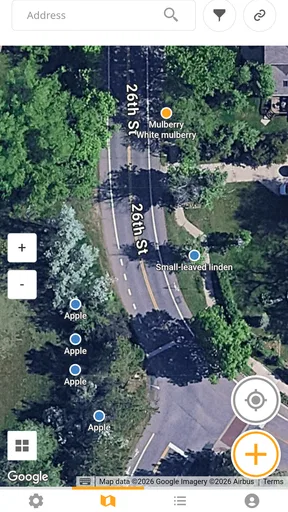
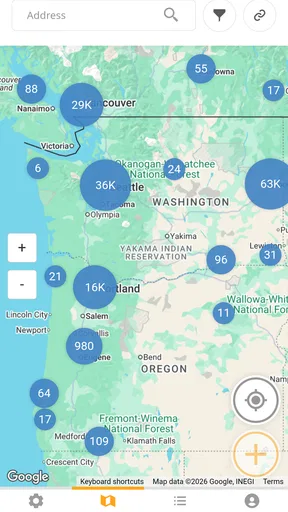
When I first downloaded Falling Fruit, I was a bit skeptical. I mean, how much wild food could there possibly be in a concrete jungle? But as soon as I fired up the app, I was greeted with a map dotted with colorful icons, each representing a different type of edible plant, tree, or shrub. From apple trees to wild herbs, there's a surprising amount of free food just waiting to be picked.
Easy Navigation
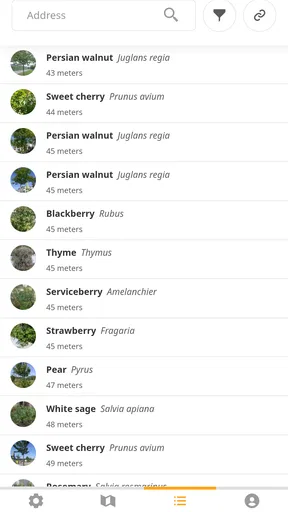
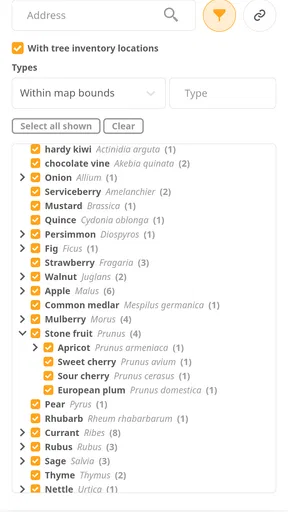
The app’s interface is super user-friendly. Navigating through the app is as easy as pie (pun intended). You can zoom in and out of the map, search for specific plants, or browse through different categories. I especially love the search function, which lets you filter by type of plant or location. If you're planning a trip, you can even scout out potential foraging spots in advance.
How I would use the map on an ordinary day
Say I have a free hour after work and want to walk through an unfamiliar part of town. I would check the map beforehand, note a few possible locations, and treat them as prompts for a walk rather than promised stops. Once there, I’d check whether the plant is actually present, whether anything is ripe, and whether the location looks appropriate to visit. If a spot is empty or inaccessible, the walk still has value; the map has helped me explore, but it hasn’t replaced common sense or local knowledge.
That workflow also helps set expectations. A pin is a lead, not a harvest forecast. Season, weather, maintenance, and other people’s activity can change what is available. I would avoid making a special trip for one listing unless I had another reason to be in the area. For a relaxed outing, several possible finds along a route are more useful than a single destination that may have changed since it was added.
Community-Driven Richness
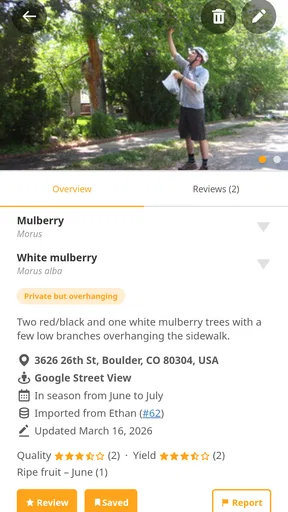
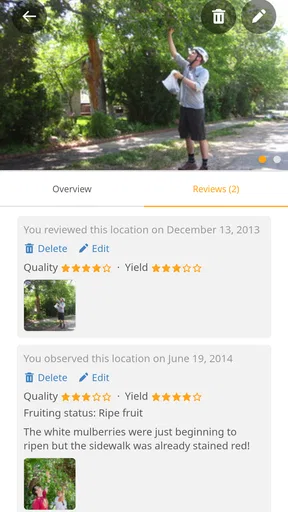
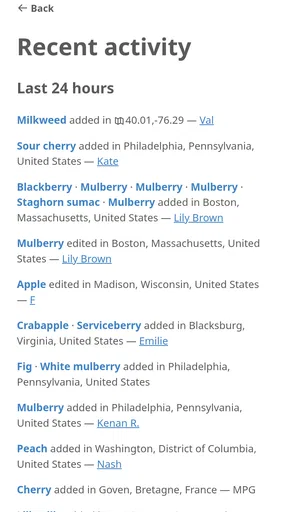
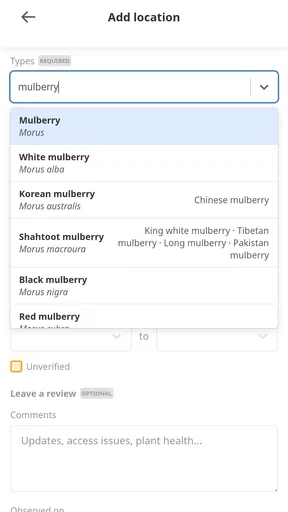
One of the coolest aspects of Falling Fruit is that it’s community-driven. Users can add new finds, update existing ones, and even share tips on the best times to harvest. I’ve contributed a few spots myself, and it feels great to be part of a community that’s so enthusiastic about urban foraging. The database is constantly growing, making it a dynamic and ever-evolving resource.
Reading a community map critically
Community contributions are both the main strength and the central trade-off. Local users can notice small or easily overlooked food sources that a conventional map would never bother to mark. But an entry reflects someone’s observation at a particular time; it cannot promise that the same plant is still there, that it has fruit today, or that the listing is complete. I’d check any notes carefully and use more than one clue before deciding a spot is worth a detour.
If I find a listing that has changed, I would treat that as a reason to improve the shared map rather than proof that the whole resource is useless. The value comes from many people maintaining local knowledge, and that works best when users report changes thoughtfully. On the other hand, someone who wants every entry verified and regularly maintained by experts may find this collaborative approach frustrating. It is better understood as a neighborhood resource than a formal inventory.
The Thrill of the Hunt
There’s something thrilling about heading out with the app in hand, not knowing exactly what you’ll find. It turns a regular walk into an adventure. Plus, it’s a fantastic way to learn about the plants around you. Each entry in the app comes with information about the plant, its uses, and even recipes. I’ve learned so much about what’s edible and what’s not, which is pretty handy if you ask me.
Learning without taking unnecessary risks
I would separate learning about a plant from deciding to eat it. A map entry and its accompanying information can help me decide what to research, but I would not rely on a pin or a recipe alone to identify an unfamiliar specimen. If I cannot confidently identify the plant and distinguish it from similar-looking varieties, I leave it untouched. That is especially important for beginners: the app can encourage curiosity, but responsible identification takes care beyond checking a map.
There are other practical checks too. A plant growing beside a busy road, in a neglected area, or somewhere that may have been treated should give me pause, even if it is listed. I would also consider how much to take and whether other people or wildlife rely on the same source. The most useful habit is to arrive prepared to observe and learn, not committed to collecting food regardless of what the site looks like.
Where a different kind of app may serve you better
Compared with general-purpose mapping apps, Falling Fruit is built around the question of what edible plants might be nearby, rather than simply how to get from one place to another. That focus makes it more interesting for urban foragers, but it does not turn it into a full navigation tool. I would use an ordinary map for route planning and this one to decide what locations might make a walk more intriguing.
It also fills a different role from plant-identification apps and printed field guides. Those are more appropriate when the problem is identifying a plant in front of you; a location map is more useful when you already want to explore possible food sources. For someone serious about foraging, these tools can complement one another. For someone who only wants a quick answer about an unknown plant, Falling Fruit is not the right substitute for a dependable identification resource.
Some Challenges
Of course, no app is perfect. Because it’s user-generated, some entries might be outdated or inaccurate. I’ve come across a few spots that no longer had any fruit or were mislabeled. It’s always a good idea to double-check any information before diving in. Also, remember to forage responsibly and respect private property – the app emphasizes this, but it’s always worth reiterating.
There is a less obvious cost to relying on the map: checking a lead takes time. A nearby pin may be hidden behind a fence, on land you should not enter, or simply not worth collecting from when you arrive. I’d keep a flexible plan and avoid treating every marked location as public access. The map can point toward a possibility, but it cannot replace permission, good judgment, or respect for the people who live and work nearby.
Enhancing Your Foraging Experience
For those wanting to kick their foraging up a notch, the app integrates with other resources and provides links to detailed guides and local laws regarding foraging. This can be particularly useful if you're traveling to a new area and aren't familiar with the local flora and regulations.
Even with those resources, I would check the rules that apply to the exact place I plan to visit. Permission and restrictions can differ between a public space, private property, and other managed land. When I travel, I’d use the app to discover possibilities, then verify what I’m allowed to do before picking anything. That extra step is a worthwhile trade-off for avoiding an awkward encounter or taking something from a place where harvesting is not permitted.
On top of that, I love the feature that allows you to track what you’ve collected. It’s satisfying to look back and see the variety of plants you’ve discovered, not to mention it helps you keep track of what’s currently in season.
What to expect from the price and commitment
At $0.99, the initial cost is small, but the bigger commitment is the attention foraging asks of you: checking locations, learning plants, considering access, and being willing to come home empty-handed. I think that is a fair exchange for someone who already enjoys walking and wants a practical reason to explore. It is less compelling for someone who expects a ready-made list of guaranteed ingredients with no extra research.
Switching from another mapping habit is easy in one sense: you can use this as a discovery layer and keep your usual navigation tools for directions. The harder adjustment is mental. Instead of asking, “What can I pick here?” I’d ask, “What might be here, and what do I need to verify before acting?” That cautious approach makes the app more rewarding, not less, because it keeps curiosity separate from assumptions.
Who will get the most from it
I’d recommend it most to city residents who enjoy walking, amateur naturalists, and experienced foragers who want community-sourced leads. It can also suit a family outing if the adults handle identification and permissions carefully, and use the map to make a familiar route more engaging. The Everyone age rating does not mean that wild harvesting is automatically suitable for every child or situation; supervision and safe choices remain essential.
I’d skip it if I needed a guaranteed supply of food, a professionally maintained plant catalogue, or a quick, authoritative answer about whether something is edible. It is also a weaker choice if the map has few useful entries where you live or if you are not willing to check each location in person. In those cases, a local guide, a plant-identification reference, or an ordinary map may better match the task.
Final Thoughts
All in all, Falling Fruit has turned out to be a delightful addition to my app collection. It’s not just foraging; it’s about connecting with nature, learning something new, and maybe even saving a few bucks on groceries. Whether you're an experienced forager or just curious about what’s growing in your neighborhood, give it a whirl. Who knows what hidden treasures you might find?
So, next time you’re out and about, don’t just walk by that overgrown patch of wild greenery. Fire up the app, explore, and maybe you'll uncover a bounty you never expected. Happy foraging!
Verdict
Strengths of Falling Fruit
- Extensive database of foraging locations.
- User-friendly interface and easy navigation.
- Community-driven with frequent updates.
- Supports offline access for remote areas.
- Encourages sustainable and local food sourcing.
Limitations of Falling Fruit
- Limited to specific regions or cities.
- Relies heavily on user-generated content.
- Occasional inaccuracies in location data.
- No built-in GPS navigation feature.
- Lacks detailed plant identification guides.
Similar Picks in This Category
View All
SmartThings
Samsung Electronics Co., Ltd.4.6

Google Home
Google LLC4.0

Pinterest4.2

Astrotalk - Talk to Astrologer
Astrology & Horoscope4.7

My Verizon
Verizon Consumer Group4.5

Samsung Wallet (Samsung Pay)
Samsung Electronics Co., Ltd.4.1
Frequently Asked Questions
What is Falling Fruit and how does it work?
Falling Fruit is a community-driven mapping app that helps users locate and share information about edible plants in urban areas. By utilizing GPS and user contributions, it provides a map highlighting locations where fruits, nuts, and herbs can be foraged. Users can add new locations, update existing ones, and share knowledge about local flora.
Is Falling Fruit available for both Android and iOS devices?
Yes, Falling Fruit is available for download on both Android and iOS platforms. Users can find the app on the Google Play Store for Android devices and the App Store for iOS devices. The app is regularly updated to ensure compatibility and to include new features based on user feedback.
Does Falling Fruit require an internet connection to function?
While Falling Fruit can be used offline to some extent, an internet connection is necessary for accessing the most up-to-date map data and for contributing new locations. Offline mode allows users to view previously downloaded map data, but connecting to the internet ensures they have access to the latest information and community contributions.
Is it legal to forage in the locations identified by Falling Fruit?
The legality of foraging varies by location and local regulations. Falling Fruit encourages users to research and respect local laws regarding foraging on public and private lands. Always seek permission if you're unsure about a location’s legality, and follow ethical foraging practices to protect the environment.
How does Falling Fruit ensure the accuracy of its data?
Falling Fruit relies on community contributions to keep its map data accurate and up-to-date. Users can add new locations, update existing entries, and report inaccuracies. The app's community of foragers plays a crucial role in maintaining data quality by sharing their observations and experiences with others.
